Heathcote wine – the misconceptions

Heathcote wine – the misconceptions
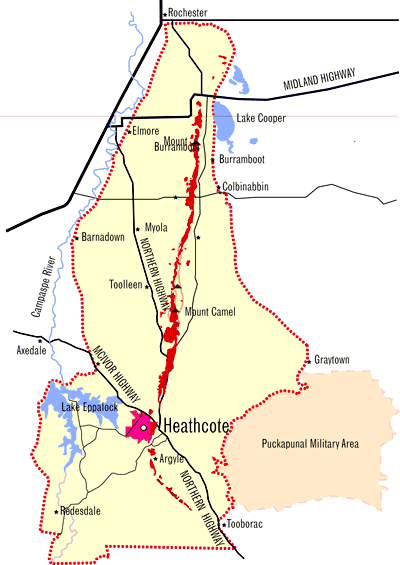
Heathcote wine region
A pack of Heathcote winemakers are in (Sydney) town this week and last night I had the good fortune to taste some of their wares (with the gents from http://redtobrownwinereview.blogspot.com/, whom were also there and I didn’t speak too, even though I must have walked past numerous times).

What was interesting about the tasting (and the dinner afterwards) though was not so much the wines, but the people and the politics behind them.

More specifically, I think I’ve always defined Heathcote as an icon region, with superstar winemakers (like Jasper Hill) and super ripe, super expensive (mainly Shiraz) wines to match. But the area is actually built upon quite conventional grower/winemaker lines, with mums and dads growing grapes and making wines with a minimum of hype.
It’s a perspective that I found quite refreshing, serving to remind that you don’t need big egos to make great wines. However, for all that positivity, the high prices (from little known wineries) for many reds came as a surprise, an indication that there is some superstar pretensions at the very least….

Anyway, one particular highlight was that of the Greenstone Vineyard wines. A joint venture between Europeans Alberto Antonini and David Gleave MW with Mark Walpole on the ground in Australia. The Greenstone operation is focused on Sangiovese (did you know that Heathcote and Chianti have a very similar climate?), Shiraz, Tempranillo and Monastrell (Mourvedre), producing wines that taste immediately different to most any other Heathcote reds.

Digging deeper and it’s actually of little surprise that the wines are as good as they are: the Sangiovese vines  are all the (superior) Brunello clone; the Shiraz clones also carefully chosen; the vineyard too is planted east-west (to combat sunburn) and at a density of 4,500 vines/hectare (one of the highest in Heathcote).

But it doesn’t stop there, for the wines themselves are made by none other than Mornington demigod Sandro Mosele. Fitting then that they all pack some serious intensity at very modest alcohols (the Shiraz sits at just 13.5% alc/vol).

In my opinion, despite the fact hat the operation is very young (first planted in 03) and the prices aren’t low, the quality of the Greenstone wines is right up there with the very best in the region. A big recommendation from me.

On a final positive note, it was reassuring to observe that there seemed to be generally few hot (alcohol heat) wines in this lineup, further emphasising just how wrong my ‘big Shiraz + big alcohol = Heathcote’ generalisation really is. Great to see.

Andrew Graham Avatar

Andrew Graham was once voted the 23rd most trusted wine critic on the planet. A WCA Journalism Young Gun now old hack with 25yrs as a buyer, judge, journalist, marketer and too much more.

8 responses to “Heathcote wine – the misconceptions”

  1. Great post Andrew, really sad I missed this one, any other stand out wines from the tasting?

    Patrick

  2. That's the only drawbacks of living in Newcastle my friend – all the trade tastings are in Sydney. Newie does have beautiful beaches though.

    As for the Heathcote gear, the other winery I really liked was Sanguine Estate (nice people too). Their 'Progeny' Shiraz/Viognier is $22ish and gives a lovely dose of Heathcote Shiraz goodness, without losing a sense of that savoury red earth regional style. Their other two Shiraz are also really well put together wines to boot.

  3. Funny that you mention the Sanguine, that was what one of my work collegues said as well (He was lucky enough to attend). Will look out for them.

  4. You work colleague is clearly a man of good taste 🙂

  5. Hello Andrew,
    This seems to be the appropriate place to pursue the subject of Heathcote shiraz from warmer years and the subsequent impact on the product.
    I bought a bottle of sanguine estate 2009 soon after release following a tasting, for me it captured the essence of a typical Heathcote shiraz………at the time…..however………when I recently opened it , gave it a lengthy decant, then tucked in it hit me……the dreaded burnt,overcooked, dried fruit had creeped into the bottle , but how?
    When I tried it previously I could not detect any of the fore mentioned yuck characters, yet 3 years or so later they are firmly in the foreground.
    I don't get it can you help ?

    Many thanks as always

    Colin

    1. Could be a bad bottle Colin? Regardless, alcohol is always a problem when we're talking Heathcote reds as, whilst oak and tannins can integrate, alcohol (and acidity for that matter) may never do so.

      Sanguine is a pretty smart producer, though 09 was a drought year after all…

  6. Andrew,

    Is it possible that these "cooked" characteristics develop in the bottle from a drought year or would they be evident to the winemaking staff at bottling?

    Thanks

    1. Sure can Colin – might be just a little cooked looking at bottling and just get worse!

Leave a Reply

Discover more from Australian Wine and Drinks Review

Subscribe now to keep reading and get access to the full archive.

Continue reading